How to Verify if a Lending Company is Legally Registered in Your State

Elena Rodriguez
Certified Financial Planner · Updated September 2026

Elena Rodriguez
Certified Financial Planner · Updated September 2026
Imagine you are sitting at your kitchen table in early 2026, looking at an email promising a $5,000 loan with 'no credit check' and instant approval. It sounds like the perfect solution to an urgent financial need, but it could be a sophisticated trap. In recent years, the Consumer Financial Protection Bureau (CFPB) has documented a steady rise in complaints regarding unlicensed lenders operating through digital channels. For instance, while a standard personal loan might carry an APR of 12% to 36%, predatory lenders often hide costs that result in effective rates exceeding 400%. This discrepancy is not just a matter of high interest; it is often the hallmark of an entity operating outside the bounds of state law.
Understanding how to verify if a lending company is legally registered in your state is perhaps the most vital step you can take before signing any financial agreement or providing sensitive personal information like your Social Security number. Many borrowers assume that because a website looks professional and features high-quality imagery, it must be legitimate. However, digital storefronts are easy to fabricate. A legitimate lender will always prioritize transparency over speed.
This article is designed to empower you with the tools needed to audit potential lenders. We will walk through the specific databases used by regulators, how to interpret licensing numbers, and how to distinguish between a helpful aggregator like NationCash—which connects you to various options—and a direct lender that must be licensed in your specific jurisdiction. By the end of this guide, you should feel confident in your ability to separate professional financial institutions from predatory actors attempting to exploit your budget.
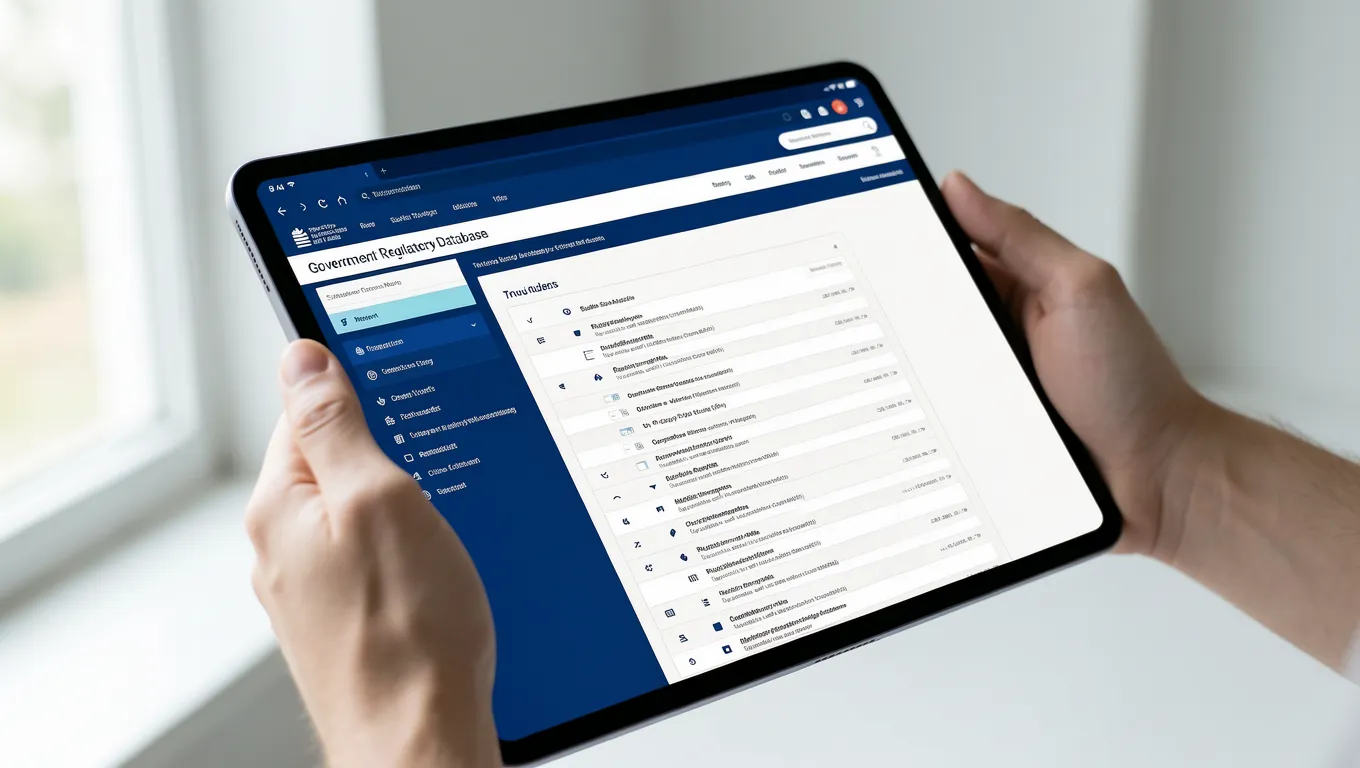
The first line of defense for any borrower is the state-level regulatory database. In 2026, most states have transitioned to highly accessible online portals where you can search for specific entities. These databases are maintained by agencies such as your state's Department of Financial Services or the Office of Consumer Credit Commissioner. If a company claims they can lend money in your state, they must be registered with that specific state's oversight body.
A common point of confusion is the Nationwide Multistate Licensing System (NMLS). While many large-scale lenders use NMLS to manage their credentials across various jurisdictions, not every small or local lender will appear there. Therefore, you should always check both the NMLS and your specific state's consumer protection website.
Not all financial entities serve the same purpose, and confusing them can lead to significant budgeting errors. It is helpful to categorize potential sources into three groups: traditional banks, fintech lenders, and aggregators. Traditional banks are heavily regulated at both state and federal levels. Fintech lenders are often more agile and use advanced algorithms for quick decisions, but they still must adhere to strict licensing requirements in every state where they operate. Aggregators, on the other hand, do not lend money themselves; instead, they act as a bridge between you and multiple lenders.
Consider this comparison: A traditional bank offers stability and physical branches but may have slower approval timelines. A fintech lender might offer an answer in minutes but operates entirely digitally. An aggregator can save you time by presenting various options at once, but it is up to you to verify the actual lenders they connect you with.
To illustrate the importance of this distinction, let's look at a worked example involving total costs. If you are looking at a $10,000 loan with an APR of 15% over a 48-month term, your monthly payment should be approximately $276. A legitimate lender will provide these exact figures in writing before you commit. In contrast, an unregulated entity might only talk about 'low daily fees' or 'small weekly payments,' which can mask a much higher total cost of borrowing. Always compare the APR, not just the monthly payment amount.
Even if a company appears in a database, you must remain vigilant. Scammers have become adept at 'spoofing' legitimate businesses by using similar names and professional-looking websites. There are several universal red flags that suggest you are dealing with an unregulated or predatory operation.
The most prominent warning sign is the request for upfront fees. Never pay any money, gift cards, or wire transfers to 'secure' a loan; legitimate lenders roll their administrative costs into the APR and never ask for payment before the funds are disbursed. If a lender insists that you must pay an 'insurance fee' or a 'processing fee' via a non-traceable method like a cryptocurrency transfer or a retail gift card, stop all communication immediately.
Another significant red flag is high-pressure sales tactics. Legitimate financial decisions require time for reflection and comparison. If a lender uses language like 'this offer expires in two hours' or 'you must sign now to lock in this rate,' they are attempting to bypass your logical scrutiny. A professional lender will allow you to review the loan agreement, which includes the Truth in Lending Act (TILA) disclosures, thoroughly before any commitment is made.
While state licensing is your primary tool for verification, it works in tandem with federal oversight. In 2026, the regulatory landscape remains a multi-layered system designed to protect consumers from systemic abuse. The Consumer Financial Protection Bureau (CFPB) and the Federal Trade Commission (FTC) serve as the heavyweights that monitor large-scale patterns of misconduct.
While states handle the specific licensing of lenders within their borders, federal laws like the Truth in Lending Act (TILA) mandate how interest rates must be disclosed. This is why understanding APR is so critical; it provides a standardized way to compare loans regardless of how the lender tries to package the costs. For example, one lender might advertise '0% down and low monthly payments,' while another advertises '12% APR.' Without the federal requirement for APR disclosure, comparing these two options would be nearly impossible.
It is also important to understand that even if a company is federally compliant, they must still respect state-specific usury laws. Many states have strict caps on how much interest can be charged on certain types of loans. If a lender promises you an APR that exceeds your state's legal limit, they are operating illegally in your jurisdiction, regardless of their federal status.
In a digital-first economy, the lack of a physical storefront does not automatically mean a company is illegitimate. Many highly reputable fintech lenders operate entirely online to reduce overhead costs. However, they must still maintain a verifiable physical presence or a registered agent in the United States.
A common tactic used by fraudulent entities is to list a prestigious-sounding address—such as a high-rise in New York City or a skyscraper in Chicago—when they actually operate from an undisclosed location overseas. You can verify this easily using digital mapping tools. If the address provided on their website leads to a virtual mailbox service, a P.O. Box, or a residential apartment building rather than a commercial office space, you should proceed with extreme caution.
Furthermore, examine their contact methods. A legitimate company will almost always provide professional customer service channels, such as a dedicated phone line and a verifiable email address associated with their corporate domain. If the only way to reach them is through an encrypted messaging app like Telegram or WhatsApp, this is a major indicator of potential fraud. Legitimate financial institutions want to be reachable; they want to build trust through transparent communication.
To ensure you are making a decision that aligns with your long-term financial health, follow this structured due diligence framework before signing any loan agreement.