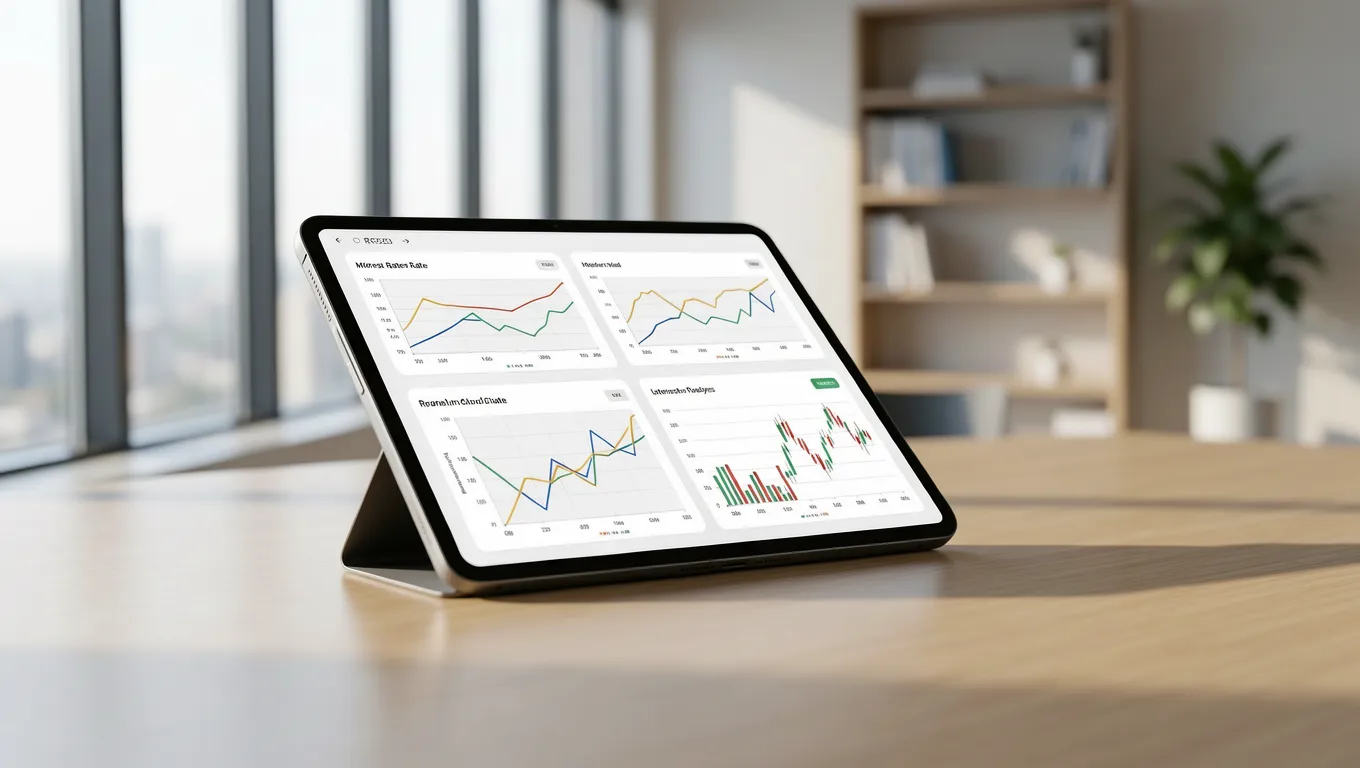
Finding the ideal financing can feel overwhelming in 2026. NationCash helps you quickly find lenders that match your unique financial profile.
No hard credit pull · Takes 2 minutes
Won't impact your credit score
Provide basic information about the amount you need and your general credit standing to see potential matches.
Review a curated list of lenders, including their estimated APRs, loan terms, and specific requirements.
Pick the offer that fits your budget best and complete your application directly with the chosen lender.
When conducting a personal loan rates comparison, understanding the landscape is essential for your financial health in 2026. Interest rates are not static; they fluctuate based on various economic indicators, including decisions made by the Federal Reserve regarding benchmark interest rates. On average, you might see an APR range of 6% to 36% depending heavily on your creditworthiness and financial history. According to data often cited by the CFPB, borrowers with higher credit scores typically access much more favorable terms than those with lower scores.
It is not just about the monthly payment you see in an advertisement. You must look at the total cost of borrowing, which includes any potential origination fees or prepayment penalties. A lender might offer a low monthly installment, but if that rate is spread over a 72-month term, you could end up paying significantly more in interest than a shorter-term loan with a higher payment. This is why a thorough comparison is vital for anyone looking to manage debt or fund large purchases.
Your debt-to-income ratio (DTI) plays a massive role in the offers you receive from lenders. If your monthly debt obligations are high relative to your gross income, lenders may view you as higher risk, which could result in higher interest rates or even a denial of credit. Before diving into a full application, it is wise to review your credit utilization and ensure there are no errors on your reports from agencies like Experian or TransUnion that might be artificially lowering your score.
Your credit score is perhaps the most significant variable when you begin a personal loan rates comparison. In 2026, lenders use sophisticated algorithms to determine your risk level in seconds. A borrower with an 'Excellent' score (typically 740 or higher) may qualify for the lowest possible interest rates, whereas someone in the 'Fair' category might see significantly higher APRs. This discrepancy can mean a difference of thousands of dollars over the life of a long-term loan.
It is important to understand that a single score doesn't tell the whole story. Lenders also look at your payment history, the age of your accounts, and recent inquiries into new credit. If you have recently opened several lines of credit, it may appear as though you are seeking excessive debt, which could impact the rates offered during your comparison process. Taking time to stabilize your credit utilization before applying can lead to much better results.
Many borrowers find that waiting just a few months to improve their score by paying down existing balances can shift them into a higher credit tier. This small effort in 2026 could result in a much lower interest rate, making your debt consolidation or home improvement project significantly more affordable in the long run.
| Lender Type | Est. APR Range | Typical Term | Best For |
|---|---|---|---|
| Traditional Banks | 7% - 18% | 24 - 60 Months | Excellent Credit |
| Credit Unions | 6% - 15% | 12 - 72 Months | Members with High Scores |
| Online Lenders | 8% - 30% | 24 - 84 Months | Speed and Convenience |
| Specialty Lenders | 15% - 36% | 12 - 48 Months | Credit Building/Niche Needs |
| Peer-to-Peer Lenders | 10% - 25% | 36 - 60 Months | Mid-Tier Credit |
Navigating the fine print is a crucial part of any personal loan rates comparison. Many borrowers focus solely on the interest rate, but the 'fine print' often contains terms that can significantly impact your long-term financial flexibility. For instance, you should always check if there are any prepayment penalties. If you plan to pay off your loan early to save on interest, a penalty could negate much of that benefit.
Furthermore, understanding the difference between APR (Annual Percentage Rate) and the simple interest rate is vital. The APR includes not only the interest but also any mandatory fees, providing a more accurate picture of what the loan will actually cost you in 2026. Lenders are required by law to disclose these figures clearly, making it easier for you to conduct an apples-to-apples comparison between different offers.
Finally, consider your repayment schedule. Some loans offer monthly payments, while others might allow for bi-weekly or even more flexible arrangements. While the frequency of payment does not always change the interest accrued, managing your cash flow effectively is key to ensuring you never miss a due date, which would negatively impact your credit score and future borrowing ability.
When you engage in a personal loan rates comparison, several variables determine the final offer. One of the most significant factors is your credit profile. Lenders use models from major bureaus to assess the likelihood that you will repay the loan on time. A higher score often leads to lower interest rates, which can save you thousands of dollars over the life of a fixed-rate installment loan.
Another critical element is your employment history and income stability. Lenders want to see consistent cash flow to ensure you can manage monthly repayments. In 2026, many lenders have become even more sophisticated in how they evaluate income verification. Providing documentation of steady earnings can significantly improve the odds of securing a competitive rate.
Lastly, do not overlook the impact of loan amount and term length. Typically, larger loan amounts may carry slightly different risk profiles, and longer terms—while making monthly payments more manageable—increase the total interest paid over time. As noted by consumer protection guidelines from the FTC, it is important to understand how these variables interact before signing any agreement.
If this option fits your situation, it's also worth comparing best personal loans.
Focus on reducing your credit utilization ratio by paying down existing balances before you apply.
Always look at the Annual Percentage Rate (APR) to understand the total cost of your loan including fees.
Some lenders charge an upfront fee that can increase your effective rate; always look for low-fee options.
Adding a co-signer with strong credit may help you secure a lower interest rate and better terms.
Get a list of potential lenders in just minutes.
Your personal information is protected by industry-leading encryption.
Access a wide network of lenders to find your best fit.
It costs you absolutely nothing to use our matching service.
Adjust the sliders to see an instant estimate. Actual rates depend on your credit profile.
* Estimate only. Actual rate and terms depend on lender approval.
Estimated Monthly Payment
$332.14
per month for 36 months
No impact on your credit score